
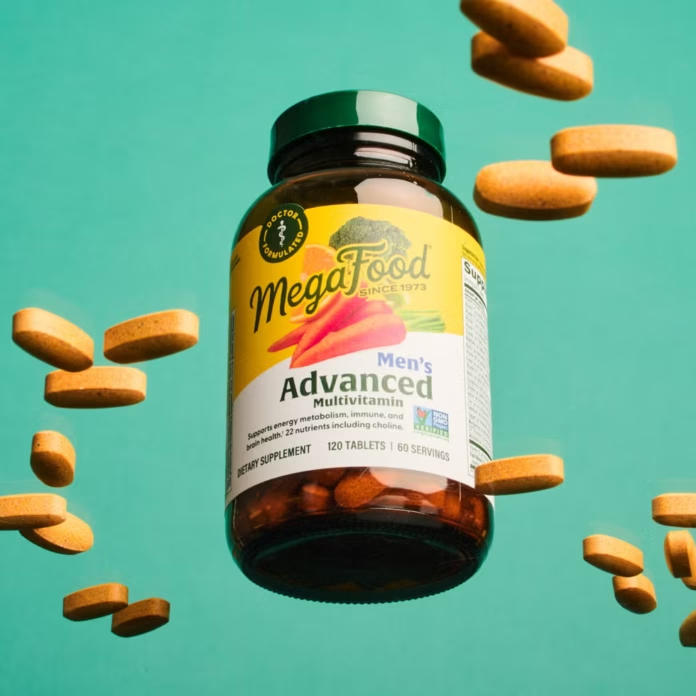
I started lifting seriously about five years ago. Read all the forums about supplements, protein, and recovery nutrition. Multivitamins got mentioned occasionally but weren’t the sexy supplements that promised massive gains.
Then I hit a wall. Training hard six days a week, eating clean, getting enough protein. But recovery dragged. Muscles stayed sore longer than they should. Energy levels tanked. Sleep quality dropped despite being exhausted.
Turns out I was deficient in several vitamins crucial for recovery – magnesium, vitamin D, zinc. My diet wasn’t as complete as I thought, and hard training increases nutrient demands beyond what normal eating provides. Adding a proper multivitamin made a noticeable difference within weeks.
Not all multivitamins support recovery equally though. Some are designed for basic health maintenance. Others include specific nutrients that aid muscle repair, reduce inflammation, and support the processes that build strength.
Vitamin D For Recovery And Testosterone
Vitamin D deficiency is incredibly common, especially if you work indoors and live anywhere north of Atlanta. I was severely deficient despite thinking I got enough sun. Blood test showed levels in the basement.
Low vitamin D tanks testosterone production. It also impairs muscle protein synthesis and increases inflammation. Basically everything that prevents proper recovery gets worse when you’re deficient.
Most multivitamins contain 400-1000 IU of vitamin D. Sounds adequate until you learn that correcting deficiency often requires 2000-5000 IU daily. I take a separate D3 supplement on top of my multivitamin to reach therapeutic doses.
Look for D3 (cholecalciferol) rather than D2. D3 raises blood levels more effectively and maintains them longer. Some multivitamins still use D2 because it’s cheaper.
The difference in my recovery was substantial. Muscle soreness duration dropped noticeably. Strength progression improved. Mood and energy stabilized. All from addressing one vitamin deficiency.
Magnesium For Muscle Function And Sleep
Magnesium is involved in over 300 biochemical reactions including muscle contraction, protein synthesis, and energy production. It’s also commonly deficient in people eating standard diets.
Hard training depletes magnesium through sweat and increased metabolic demands. If you’re not actively replacing it, levels drop and recovery suffers. Muscle cramps, poor sleep, and lingering soreness all connect to low magnesium.
The form matters enormously. Most cheap multivitamins use magnesium oxide which absorbs terribly – maybe 4% bioavailability. You’re essentially wasting that magnesium.
Better forms include citrate, glycinate, or threonate. These absorb at 30-50% rates and actually raise tissue levels. I switched from a multivitamin with oxide to one with glycinate and noticed better sleep within days.
My muscle cramps disappeared completely once magnesium levels normalized. Sleep quality improved dramatically – falling asleep faster and staying asleep longer. Both factors directly improved recovery between training sessions.
When researching men’s multivitamins, check the specific magnesium form listed. It’s often buried in fine print but makes huge practical difference.
Zinc For Testosterone And Immune Function
Zinc supports testosterone production, immune function, and protein synthesis. Deficiency impairs all three, which obviously hurts recovery and performance.
Most guys who train hard are mildly zinc deficient without knowing it. Symptoms are subtle – slightly lower testosterone, more frequent colds, slower healing. Nothing dramatic enough to notice until you correct it.
Multivitamins typically contain 10-15mg of zinc. That’s adequate for sedentary people but active men benefit from 20-30mg daily. I add a separate zinc supplement post-workout to ensure adequate intake.
Too much zinc causes problems though. Above 40mg daily can interfere with copper absorption and create imbalances. Don’t just megadose assuming more is better.
Zinc picolinate or zinc glycinate absorb better than zinc oxide or sulfate. Again, the form matters for what your body actually uses versus what passes through unabsorbed.
B Vitamins For Energy Production
B vitamins convert food into usable energy. Every metabolic pathway that powers muscle contractions and recovery depends on adequate B vitamin availability.
Heavy training increases B vitamin requirements substantially. You’re burning more fuel, which requires more B vitamins to process that fuel efficiently. Deficiency manifests as fatigue, poor recovery, and declining performance.
Most multivitamins contain B vitamins, but the forms vary. Methylated B vitamins (methylfolate and methylcobalamin) work better than synthetic folic acid and cyanocobalamin. Some people genetically can’t convert synthetic forms efficiently.
I noticed better sustained energy throughout the day after switching to methylated B vitamins. No more afternoon crashes. Training sessions felt more powerful. Could be placebo but the effect was consistent.
Excess B vitamins get peed out harmlessly, creating that bright yellow urine. Means you’re absorbing some even if most gets wasted. Better than being deficient.
Vitamin C For Tissue Repair
Vitamin C is essential for collagen synthesis, which means it’s critical for repairing connective tissue damage from training. Tendons, ligaments, and fascia all require adequate vitamin C to heal properly.
It’s also a powerful antioxidant that reduces exercise-induced oxidative stress. Heavy training creates inflammation and free radicals that damage cells. Vitamin C helps neutralize these and speed recovery.
Most people get adequate vitamin C from diet, but athletes benefit from higher doses. I aim for 500-1000mg daily, which requires supplementation beyond what my multivitamin provides.
Don’t megadose thinking it’ll prevent illness. Studies show excessive vitamin C doesn’t prevent colds in healthy people. Moderate supplementation supports recovery without waste.
Iron Considerations For Men
Most men’s multivitamins deliberately exclude iron or include minimal amounts. Men rarely need supplemental iron since we don’t lose blood monthly like women do.
Excess iron is actually problematic. It accumulates in organs and creates oxidative stress. Unless you’re a distance runner or have confirmed iron deficiency, you probably don’t need supplemental iron.
I specifically choose iron-free multivitamins. My blood tests show normal iron levels from diet alone. Adding more would be counterproductive.
If you do need iron, take it separately from your multivitamin. Calcium and certain other nutrients interfere with iron absorption when taken together.
Antioxidants And Anti-Inflammatory Compounds
Some multivitamins include extras like selenium, vitamin E, or plant extracts with antioxidant properties. These theoretically reduce exercise-induced inflammation and support recovery.
The evidence is mixed. Some antioxidant supplementation might actually blunt training adaptations by interfering with the natural inflammatory response that drives improvement. Your body needs some inflammation to trigger adaptation.
I avoid multivitamins with massive antioxidant doses. Moderate amounts from food and a basic multivitamin seem adequate. Megadosing antioxidants might prevent the very adaptations I’m training to create.
Vitamin E particularly worries me. High doses have shown potential health risks in studies, and most diets provide adequate amounts. I specifically check that multivitamins don’t contain excessive vitamin E.
Timing And Consistency
Taking multivitamins with food improves absorption of fat-soluble vitamins (A, D, E, K). I take mine with breakfast which includes healthy fats from eggs or avocado.
Consistency matters more than perfect timing. Taking your multivitamin daily at whatever time works for your schedule beats taking it irregularly at the “optimal” time.
I keep my multivitamin bottle next to my coffee maker. See it every morning, take it automatically. Simple systems ensure consistency.
Wrapping This Up
Multivitamins support muscle recovery by filling nutritional gaps that diet and training demands create. Key nutrients include vitamin D, magnesium, zinc, and B vitamins in forms your body actually absorbs.
Recovery improvements won’t be dramatic like taking creatine or optimizing protein intake. But correcting deficiencies removes obstacles to recovery and lets your training produce better results.
Blood tests identify your actual deficiencies. Don’t just assume you need everything. Target specific nutrients that testing shows you’re lacking.
Multivitamins work best as part of complete recovery strategy. Sleep, nutrition, stress management, and training programming all matter more. Supplements fill gaps but don’t replace fundamentals.
Choose multivitamins with quality ingredient forms, appropriate doses, and third-party testing. Take them consistently with food. Give them several weeks to affect tissue levels before judging effectiveness.

